
PJ Lombardo on the cult magazine podcast
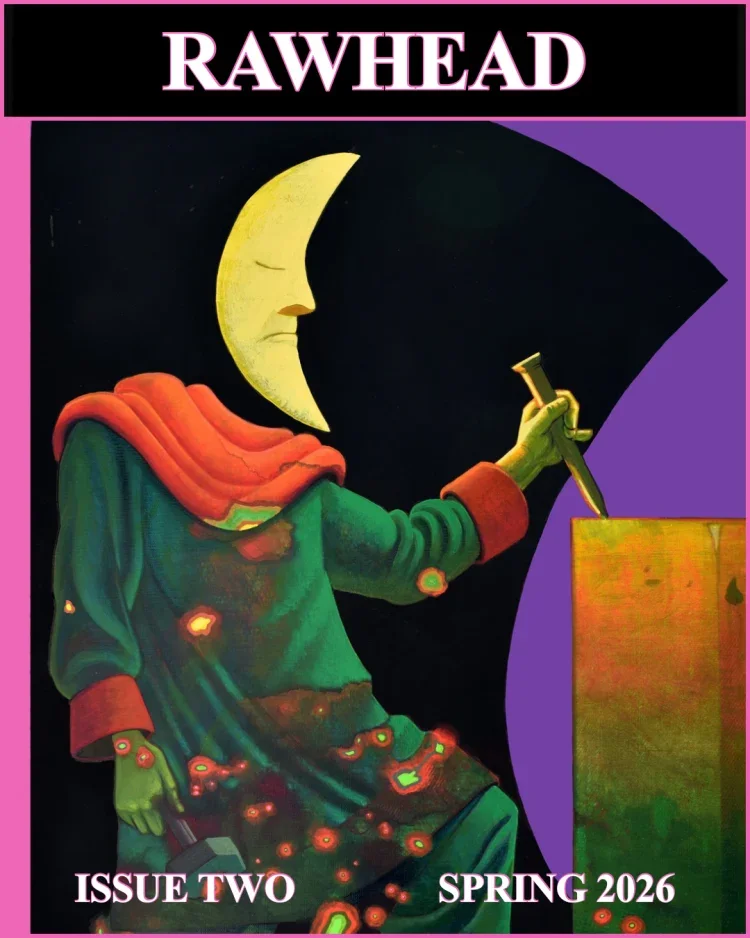
Rawhead interview of the blue Cherub by John T. Leonard
The Emptiness Inside: A review of The Blue Cherub by PJ Lombardo
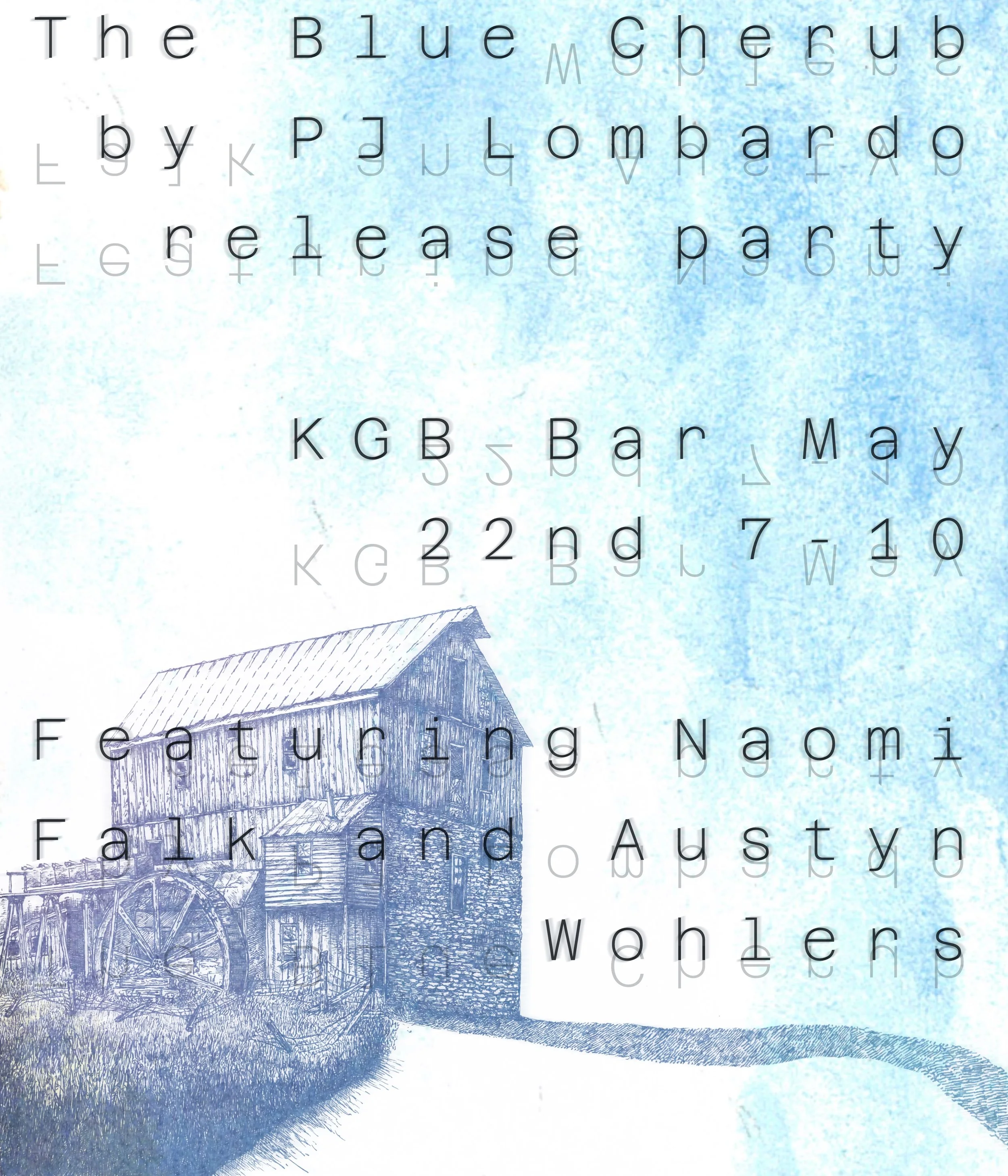
Blue Cherub Relase party Friday May 22nd at KGB BAr
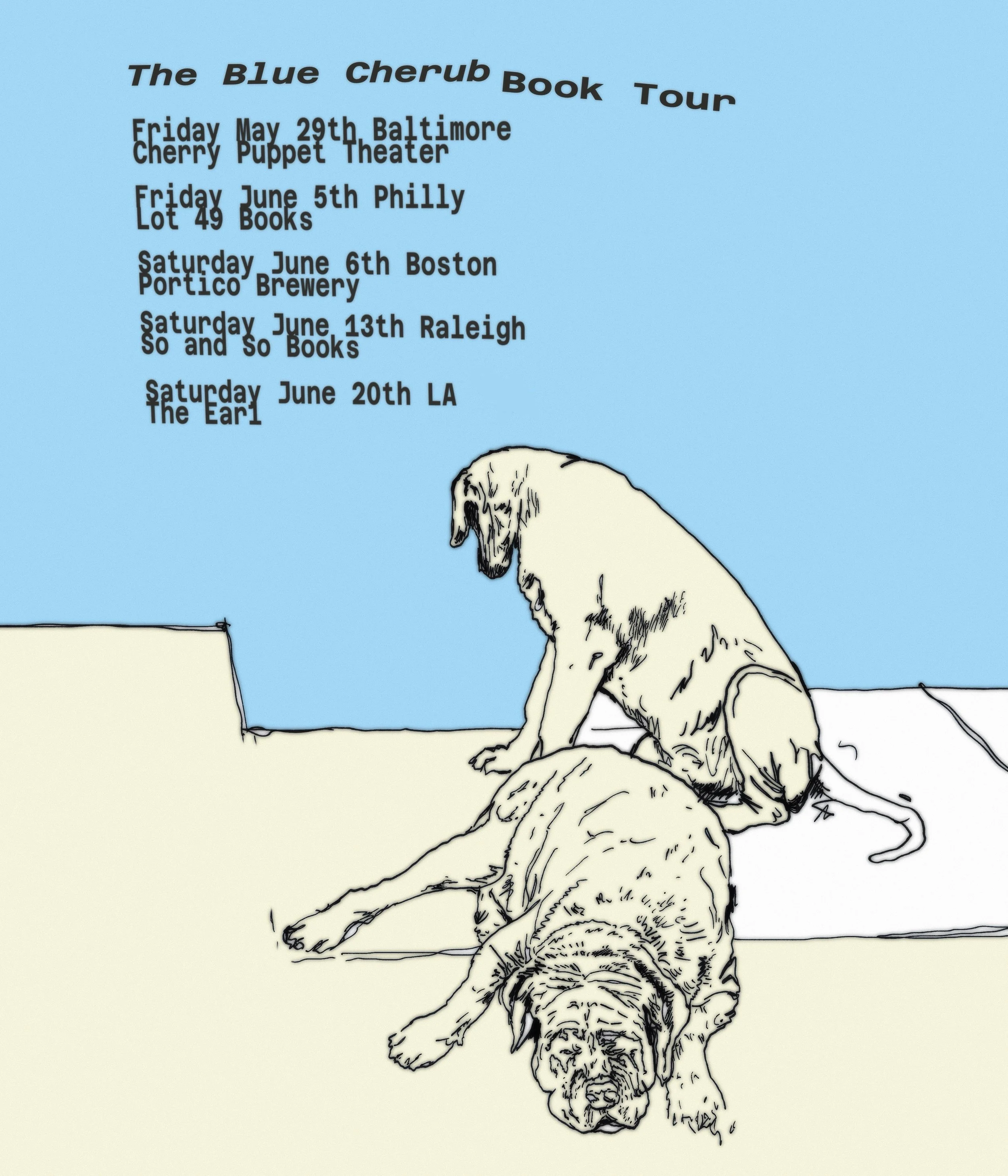
blue cherub… The book tour

2 Poems from “The Blue Cherub” - New Mundo Press
Four Poems from The Blue Cherub - High horse

American Apocalypse: The Blue Cherub by PJ Lombardo – Sofija Popovska
by Sofija Popovska
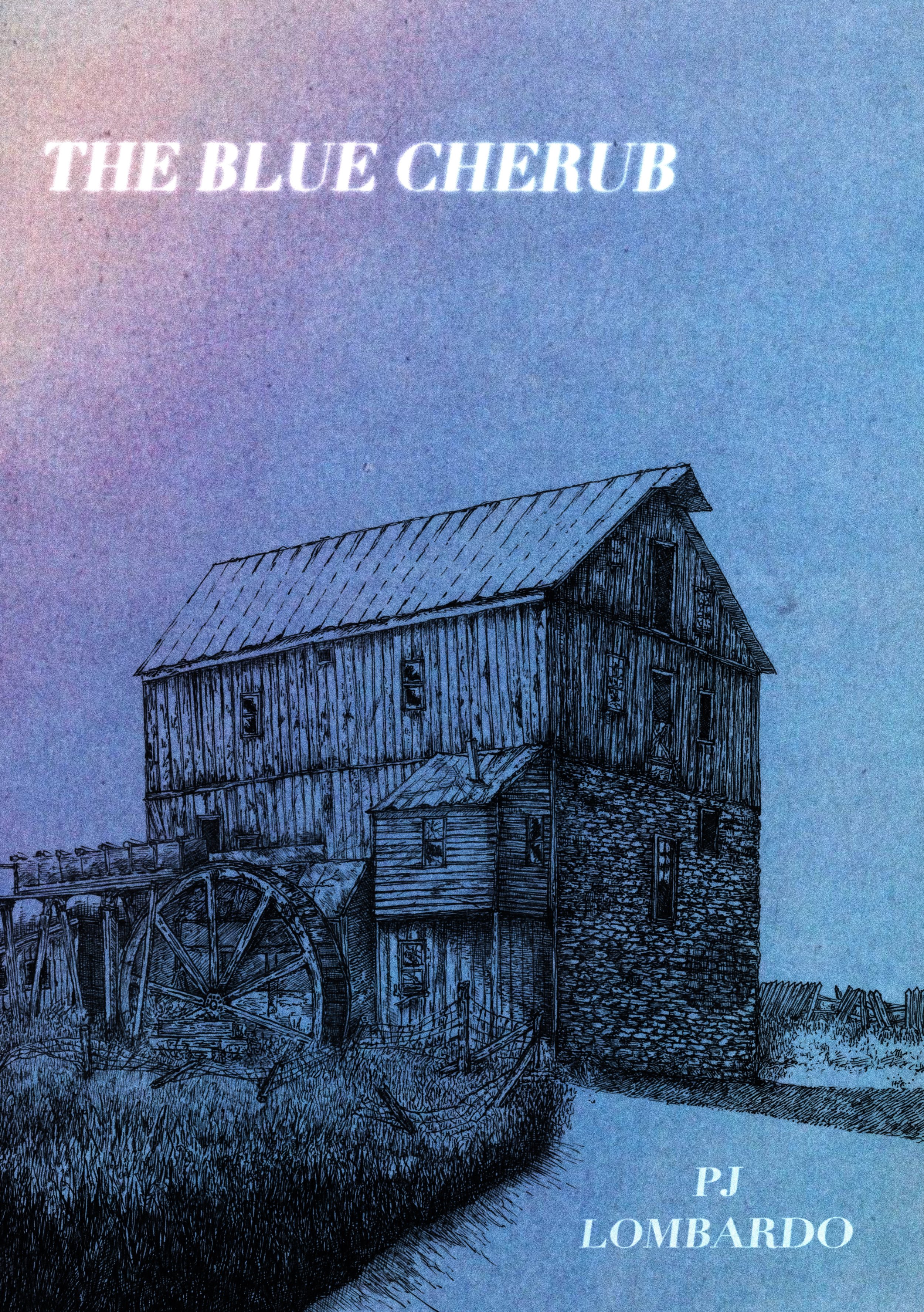
Praise for the blue Cherub
The Blue Cherub is a book about having kids, teaching them—and ourselves—how to descend into the hellscape of our American present. And what’s there to say about the future? “I see my children rolling up the tombstoned driveway,” PJ Lombardo writes, as the poems’ domestic scenes tumble into nightmare: “my rotten children / soldered together like a cyclopean eye / driving towards / salvation’s pentobarbital.” Such perceptual saturations in Lombardo’s work create a punk wall of sound in which artist and audience are crushed into communion. But in this book the walls are blue, filled with anxiety and artificial light, wondering what kind of “bloodied gift” we might be leaving behind us.
— Leon Pradeau, Revue Transat
PJ Lombardo’s debut collection left me desolate and full of love. I can only resort to the words of Ross Farrar, who said ‘I caught the world flu. I saw the world blue.’
— Sam Robinson, author of Man with Head Removed
"Lombardo's poetry evokes the prophetic voice of an anachronistic ghost--impossibly present in our world's decay, its overgrowth, the landfills of books, movies, digital media, every dying windmill and abandoned house, yard fulls of rusted electronics. A future already aborted. A past warped by what it has come to create. The Blue Cherub is tender and melancholy, nomadic and reflective, waiting out a flood that might never pass."
— Mike Corrao, author of Being Towards Death
The Blue Cherub pulsates out from an abandoned mill—the axis mundi of a rusted cosmos where planets have stomachs, acne-riddled stars rattle with calcium, and the sun doesn’t shine so much as fry, eat, and ask questions about where your children are. The cosmic and the industrial fuse, corroding and soaked in the same blue: blue rain, blue bodies, blue apples, blue vipers, a blue crash. A chthonic She circulates through the wreckage; feral animals populate it; children hover at the edge of existence. The speaker’s body, by contrast, is undeniably present. Running on lithium and opiates, its misfiring eyes are conduits of truth. Heir to Antonin Artaud and Joyce Mansour, and steeped in horror cinema, PJ Lombardo’s debut builds a language from what perception can no longer hold.
— Karla Kelsey, author of Transcendental Factory: for Mina Loy
These visionary poems depict sensuous wastelands—so lush in their depraved occasions for lightheaded and still lucid beauty—that are voiced in fragments, giving the reader a sense of a whole and its ever-lurking parts in relation. Shuffling in and through the margins of these fragments are—at first—the children, dreaming in an unspecified abundance, that marvel this whole even as it unravels, afloat, into fluid or something blue. I find the children gleaming in the speaker’s “I,” in their every encounter with the Blue Cherub of Light’s Passage, as these pages pulse on and on.
— AM Ringwalt, author of What Floods
In PJ Lombardo’s THE BLUE CHERUB, visions recur and reverberate: children, mills, termites, cherubs, the color blue. But I hesitate to call these images—they’re more like silhouettes burning through a closed eyelid. Lombardo is a surrealist, and these poems are a violent hallucination of the collective unconscious—“illegible omens” of the death cult that is 21st century American life. I love this freaky book and its taut, frightening poems.
— Marty Cain, author of The Prelude
This is not Randomized Artistic Language nor is Lombardo 1 of 1,000,000 new Ashberys. The Blue Cherub is not ironic nor pastiche. The Blue Cherub is pro poetry. Blurs subject into and out of object like Cohen... like Celan by more than conjunction. The words are eternal sizes. The book holds like a... wet diary. The radiant ornament overwhelms your domestic daisy chain.
— Zan de Parry, author of Cold Dogs
PJ Lombardo is a sonic, incantatory poet and here is a debut with teeth to form dissonance and lungs to breathe smoke. In The Blue Cherub, the reader reaves reluctant jewels like crushed bits of fender unraveled from the strata of the post-hedonic hoard that’s buried beneath us / that tries to bury us. “It’s alright to go to the horreum / and it’s alright to fill a jettank,” Lombardo intones, “while remorseless / vultures spiral vamp and / bluely collapse inside / your house in cinders,” grieving a future that’s seemingly already forfeit. Lombardo hears the gears grinding within the mechanism and sends his voice out anyway, as a kind of counter-melody, as possible accomplice, as possible antidote.
—Danika Stegeman, author of Ablation